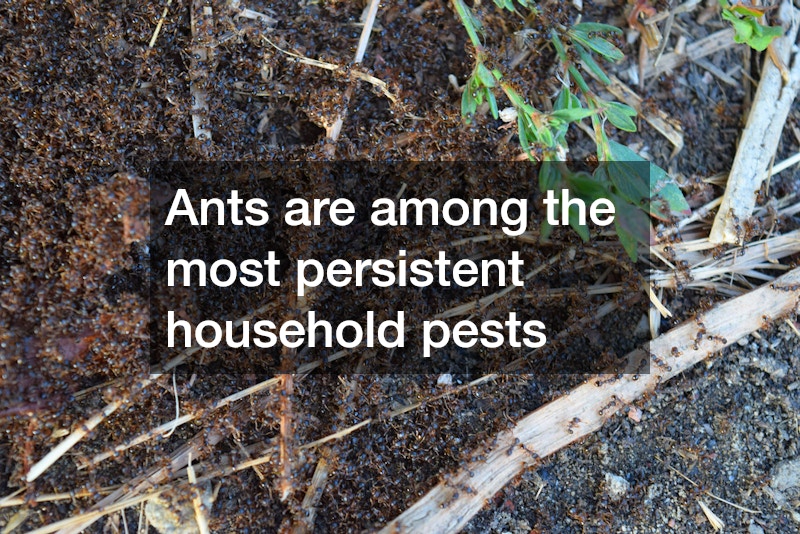
Ants are among the most persistent household pests. A few ants near the kitchen sink can quickly turn into a steady trail across countertops, floors, cabinets, or walls. Many homeowners initially try to solve the problem themselves with sprays, traps, household cleaners, or other do-it-yourself methods. Sometimes those efforts provide temporary relief, but the ants return a few days or weeks later.
When DIY treatments fail repeatedly, calling a professional ant exterminator can help address the source of the problem instead of only eliminating the ants you can see. Professionals can identify the species, locate likely nesting areas, and develop a treatment strategy based on how the colony is behaving.
DIY Treatments May Only Kill Visible Ants
One of the biggest problems with many DIY ant treatments is that they focus on worker ants.
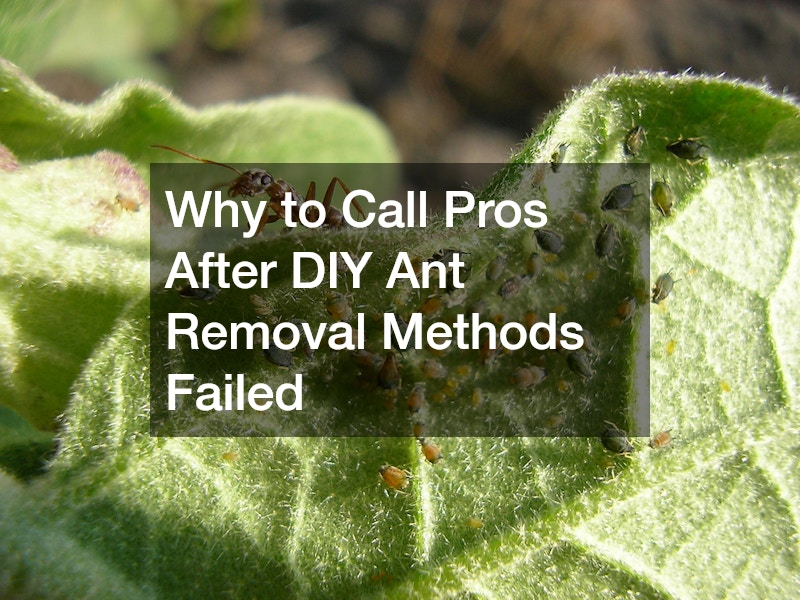
The ants crawling across a countertop represent only a portion of the colony. The queen, developing ants, and many workers may remain hidden inside walls, beneath floors, outdoors, or in other protected locations.
Killing the visible ants can make the infestation appear to be gone temporarily. However, if the colony remains active, new workers can eventually begin searching for food again.
An ant exterminator approaches the problem with the colony in mind rather than simply treating individual insects.
Professionals Can Identify the Ant Species
Not every ant infestation should be treated the same way.
Different ant species have different nesting habits, food preferences, and behaviors. Some primarily nest outdoors and enter buildings looking for food. Others may establish nests in wall voids, damp wood, insulation, or other areas within a structure.
Correct identification can therefore play an important role in successful treatment.
Homeowners may have difficulty distinguishing between similar-looking ants, especially when the insects are extremely small. A professional ant exterminator can examine their appearance, behavior, and activity patterns to determine which treatment methods are most appropriate.
Sprays Can Sometimes Disrupt Ant Behavior
Many homeowners reach for an aerosol spray as soon as they spot ants.
While sprays may kill ants that come into direct contact with the product, they do not necessarily reach the colony. Depending on the species and product being used, certain treatments may also cause ants to change their travel routes.
That can make the infestation seem as though it has disappeared from one area while activity begins somewhere else.
Professionals understand how different treatment products affect ant behavior. Instead of repeatedly spraying visible trails, they can select methods designed around the biology of the particular species.
Professionals Know Where to Look for Nests
Ant colonies are often located in places homeowners cannot easily see.
Professionals may inspect around windows, doors, plumbing lines, foundation cracks, cabinets, appliances, crawl spaces, exterior walls, landscaping, and other potential nesting or entry areas.
They also look for conditions that may be attracting ants, including food residue, moisture, leaking pipes, vegetation touching the house, and gaps around utility penetrations.
An experienced ant exterminator can use these clues to narrow down where ants are likely nesting and traveling.
The Problem May Extend Beyond Your Kitchen
Ants are commonly noticed in kitchens because food and water are readily available there. However, the kitchen may only be the location where workers are feeding.
The colony itself could be located elsewhere.
Ants can travel significant distances while searching for resources. They may enter through one section of a home and eventually appear in another room entirely.
Professionals examine the broader property rather than focusing exclusively on the place where ants happen to be visible. This more comprehensive approach can help uncover pathways that DIY treatments may miss.
Professionals Can Use Targeted Treatments
Pest control professionals have access to multiple treatment methods and can determine which ones are appropriate for a particular infestation.
Depending on the ant species and circumstances, treatment may involve strategically placed baits, crack-and-crevice applications, exterior treatments, or other methods.
Baits can be especially useful for certain infestations because worker ants may carry the material back toward the colony. However, correct bait selection and placement are important.
An ant exterminator can determine where treatments should be placed while considering children, pets, food preparation areas, and other household conditions.
They Can Identify What Is Attracting the Ants
Treatment alone may not solve an ant problem if the conditions attracting them remain unchanged.
Food crumbs, sugary spills, pet food, overflowing trash, grease, and open food containers can provide easy feeding opportunities. Water from leaking pipes, damp sinks, condensation, or poorly drained exterior areas can also attract certain species.
Professionals may recommend sanitation or maintenance changes as part of the overall treatment plan.
These recommendations can make the property less appealing to ants while helping reduce the likelihood of another infestation.
Entry Points Can Be Addressed
Ants can fit through extremely small openings.
Common access points include gaps around windows and doors, foundation cracks, openings where plumbing or electrical lines enter the building, and damaged exterior materials.
DIY treatments may reduce an existing trail without addressing how ants are getting inside.
A professional ant exterminator may point out likely entry areas that should be sealed or repaired. Combining pest treatment with exclusion techniques can create a more complete approach to controlling ant activity.
Recurring Infestations May Indicate a Larger Problem
Seeing ants return repeatedly despite cleaning and treatment can be a sign that the colony has not been eliminated.
There could also be multiple colonies around the property or conditions that continue to support ant activity.
Repeated infestations are a good reason to stop spending money on products that provide only short-term results. Professional treatment can help determine why the ants continue returning and what needs to change.
Professional Treatment Can Save Time
DIY ant removal can become frustrating when it turns into a cycle of spraying, cleaning, setting traps, and seeing ants return.
Hiring a professional may reduce the amount of time homeowners spend experimenting with different treatments.
Instead of guessing about the species, nest location, or appropriate product, an ant exterminator can perform an inspection and develop a targeted strategy.
Know When It Is Time to Call for Help
Trying a basic DIY approach for a small ant problem is understandable. However, persistent activity, ants appearing throughout multiple rooms, recurring trails, or unsuccessful treatments may indicate that professional assistance is needed.
An ant exterminator can identify the species, investigate nesting and entry areas, select appropriate treatment methods, and recommend steps to reduce future activity.
When DIY ant removal methods repeatedly fail, addressing the colony and the conditions supporting it can be far more effective than continuing to treat the ants you happen to see.